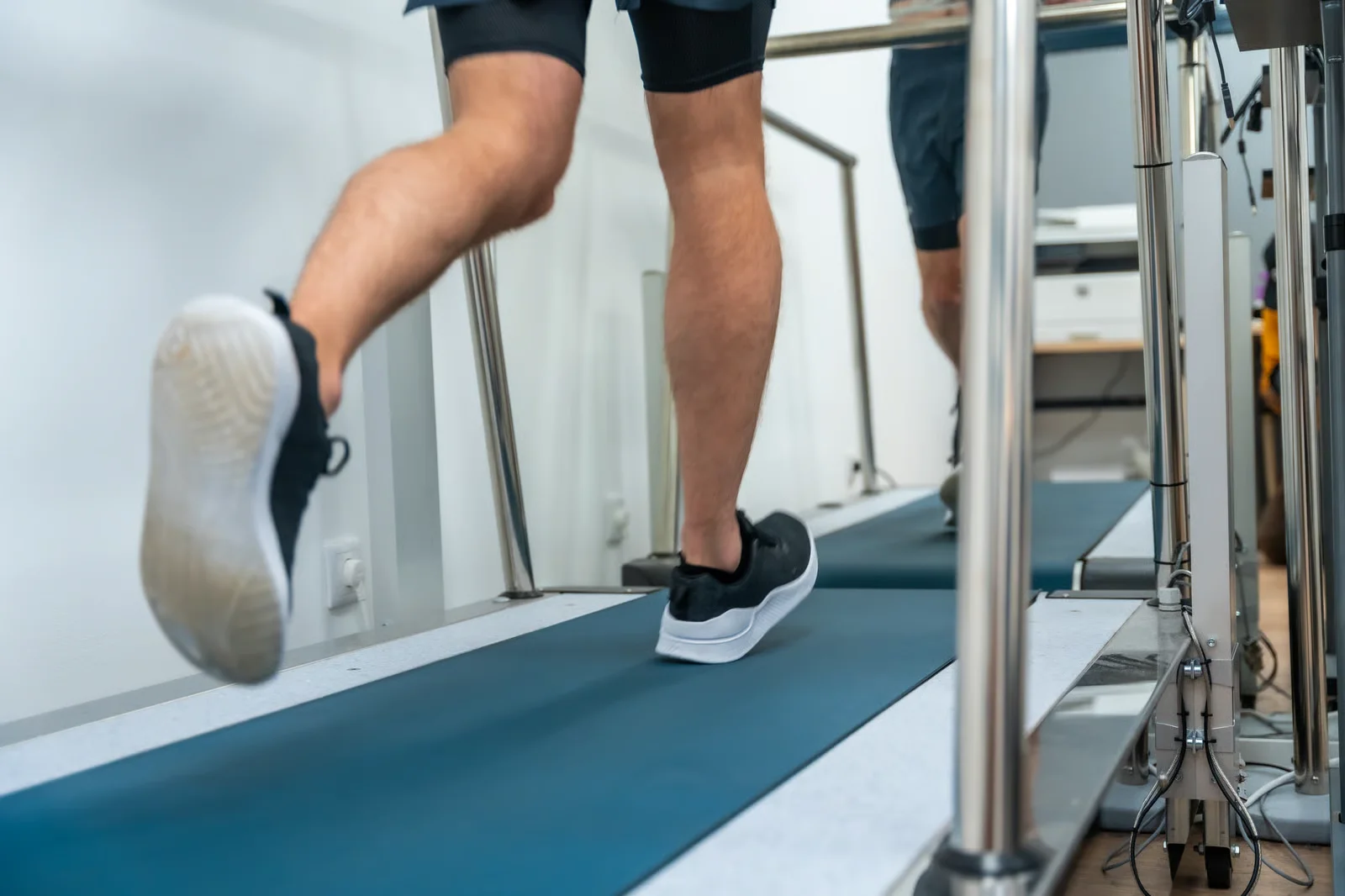
Touching your toes is not the same as moving well. Many active people in Upper Manhattan stretch because they feel tight, but flexibility alone may not solve stiffness, pain, or poor workout mechanics. Our physical therapists help patients understand whether they need more range, more control, more strength, or a better combination of all three.
>>>Start improving how your body moves and book an appointment online.
What Flexibility Really Means
Flexibility is your body’s ability to lengthen a muscle or soft tissue. When someone says they have tight hamstrings, stiff hips, or limited shoulder range, they are often talking about flexibility.
Stretching can be helpful when a muscle truly needs more length. It may make movement feel easier, reduce a sense of tightness, and support better positioning during exercise or daily activity.
The challenge is that tightness is not always caused by a short muscle. Sometimes your body feels tight because it is guarding, compensating, tired, weak, or trying to protect an irritated area. That is why stretching the same spot over and over does not always create lasting change.
Our physical therapists look at the reason behind the tightness, not just the place where you feel it.
What Mobility Really Means
Mobility is your ability to move a joint through its available range with control. It includes flexibility, but it also depends on strength, coordination, balance, joint motion, breathing, posture, and nervous system control.
For example, you may be flexible enough to pull your knee toward your chest, but that does not automatically mean your hip can control motion during a squat, lunge, run, or dance class. Mobility asks a bigger question: can you use your range safely and efficiently?
This is why mobility often matters more during workouts and sports. Your body needs to move through positions while managing load, speed, balance, and direction changes.
Signs You May Need More Flexibility
Some patients truly do need more flexibility. This may be the case when a muscle group consistently limits position or movement and does not improve with warmup or strengthening alone.
You may need more flexibility if you notice:
- A clear pulling sensation that limits motion
- Difficulty getting into basic positions because of muscle tightness
- One side feels much shorter or more restricted than the other
- Stretching gives lasting improvement when done consistently
- Your range feels limited even when you are relaxed
Flexibility work should still be specific. Random stretching may not address the areas that actually affect your movement. Our physical therapists help patients choose stretches that match their body, activity level, and goals.
Signs You May Need More Mobility
Mobility becomes the priority when you have range but cannot control it well. This is common in active people who stretch often but still feel unstable, stiff, or restricted during movement.
You may need more mobility if your squat, stride, overhead reach, or rotation feels limited during activity but looks different when tested passively. You may also need mobility work if your body shifts, twists, collapses, or compensates during exercise.
A runner may have enough hip flexibility but lack hip control during single-leg loading. A lifter may have shoulder flexibility but struggle to stabilize overhead. A desk worker may stretch the neck daily but still feel restricted because the upper back, ribs, and shoulders are not moving well together.
Why Stretching Alone May Not Fix the Problem
Stretching can feel good, but it is not always enough. If your body does not feel safe or strong in a new range, it may tighten again. That is one reason people stretch every day and still feel like they are starting over.
Our physical therapists often combine flexibility work with strengthening, motor control, and hands-on care. Manual Therapy can help improve joint and soft tissue mobility when restrictions affect movement. Active Release Techniquemay help address soft tissue tension that changes how the body moves.
For patients who need more control, Pilates for Rehab can support alignment, breathing, core strength, and coordinated movement. The goal is not just to reach farther. The goal is to own the range you need for real life.
How We Decide What Your Body Needs
Guessing can waste time. Some people stretch when they need strength. Others lift harder when they need joint mobility. Some need recovery, not more effort.
Our physical therapists assess how your body moves, where motion is limited, which muscles are working too much, and which areas are not contributing enough. We look at how symptoms show up during daily life, workouts, commuting, studying, work, or sports.
Depending on the patient, care may also include Cupping Therapy for muscle tension, Low-Level Laser Therapy to support tissue healing, NEUBIE Therapy for neuromuscular re-education, or Heart Rate Variability to better understand stress and recovery.
Better Movement for Upper Manhattan Life
Your body has to do more than perform in a gym. It has to climb subway stairs, sit through long classes, carry groceries, walk across campus, lift children, stand at work, and recover after busy days.
That is why mobility and flexibility should be personal. A Columbia student, a runner in Riverside Park, a dancer, a parent, and a strength athlete may all need different movement strategies.
We serve patients near Harlem and Morningside Heights who want to feel less restricted and more confident in their movement. Creative Physical Medicine for Health and Healing means we combine touch, exercise, education, and innovative care to help patients move with purpose.
Find the Right Balance for Your Body
Flexibility helps you access range. Mobility helps you control it. Most people need some combination of both, but the right balance depends on your body, symptoms, and goals.
Our physical therapists can help you stop guessing and start moving with a plan. Call (212) 222-6525 or book an appointment online to schedule your evaluation and learn what your body actually needs.