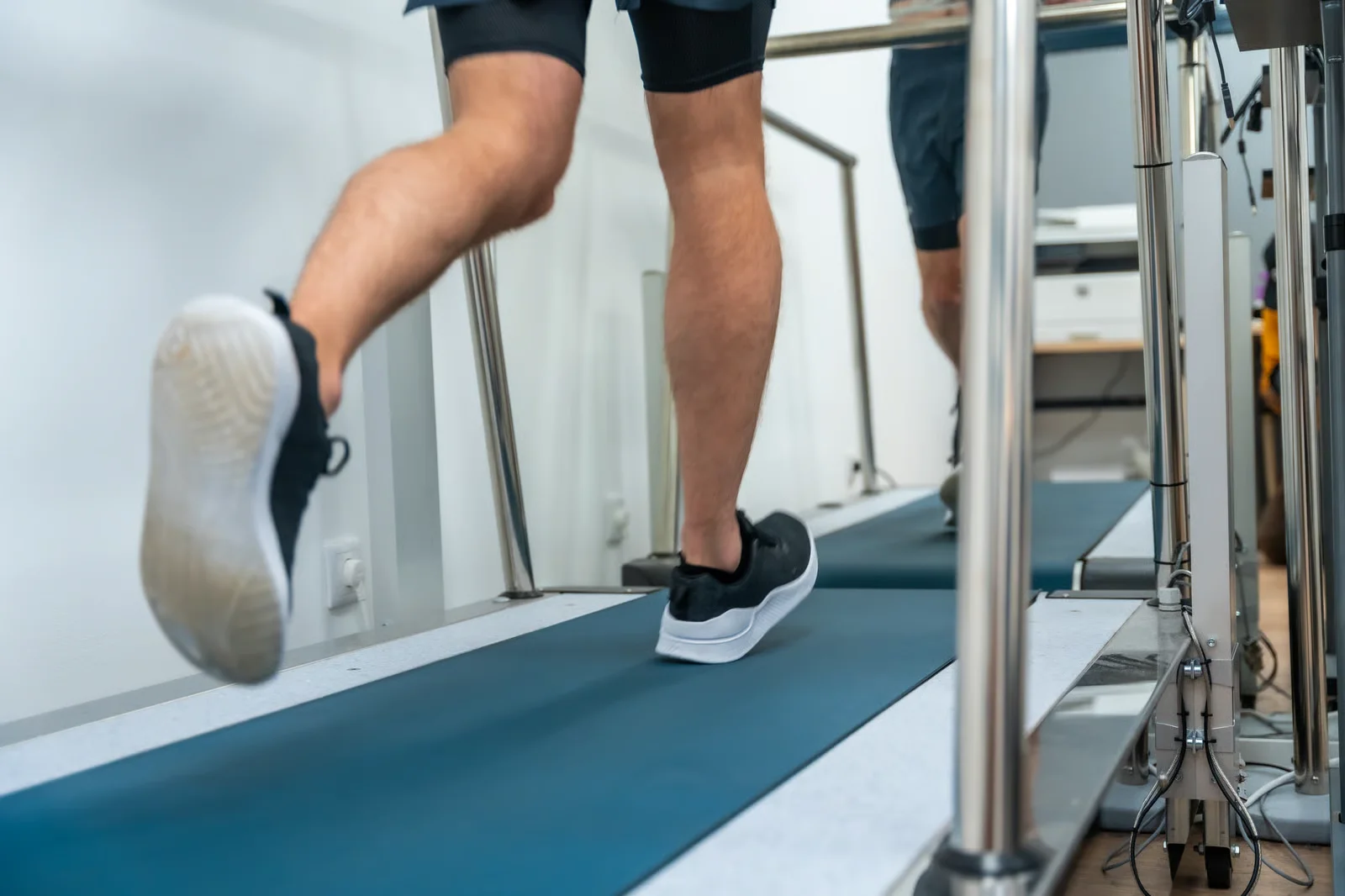
Pain in your knees, hips, or even shoulders might not be coming from where you think. In many cases, dysfunction begins at the base: your feet. As the foundation of the kinetic chain, your feet play a crucial role in how the rest of your body moves, absorbs force, and maintains balance.
If you've been chasing pain from one joint to another without relief, it may be time to look down.
Small issues in foot mechanics can lead to big problems.
>>>Request an appointment to start correcting your foundation for better movement.
What Is the Kinetic Chain?
The kinetic chain is a term we use to describe how your body’s joints and segments work together in a linked system. When one part of the chain moves or compensates, it affects the other parts. This is especially true during walking, running, lifting, or any activity that requires coordinated motion.
Your feet are the first point of contact with the ground, meaning they influence everything above them. If your arch collapses, your ankle rolls in, or your toes don’t engage properly, it sends a ripple effect through the chain and can lead to pain or dysfunction in completely different areas.
Common Signs Foot Dysfunction May Be Causing Your Pain
We see this regularly at our Harlem and Morningside Heights clinics. Many patients come in with hip pain, low back tension, or knee instability, only to discover that poor foot mechanics were contributing more than they realized.
Some common signs that your feet may be the root cause include:
- Knee pain that worsens when walking or climbing stairs
- Low back discomfort that seems unrelated to posture
- Hip tightness or imbalance without direct injury
- Recurrent ankle sprains or rolling
- Uneven wear on shoes or foot fatigue after standing
By addressing these patterns at the source, we help patients move beyond symptom-focused treatment and into long-term functional change.
How We Assess the Foot’s Role in Pain
When someone visits us with a pain complaint, our first step is always a full-body movement evaluation. We look at gait, posture, foot strike, arch structure, and how the lower extremity engages during common tasks like squatting or stepping.
From there, we test mobility and strength at each joint along the chain. This helps us determine whether the feet are the origin of the problem, part of a compensation pattern, or reacting to dysfunction elsewhere.
We often use tools like Manual Therapy to improve joint mobility, Pilates for Rehab to retrain foundational movement patterns, and NEUBIE Therapy to restore neuromuscular activation, especially in the feet and ankles.
Why Ignoring Your Feet Can Delay Healing
Ignoring the foot’s role in pain is like patching a roof without checking the foundation. You may feel short-term improvement, but the underlying instability remains.
When we only treat the area where pain shows up, like applying ice to the knee or stretching the hip, we’re missing the upstream causes. Many patients come to us frustrated after trying various therapies with limited results. Once we correct their foot and ankle mechanics, the rest of their body starts functioning more efficiently.
Foot Dysfunction and Athletic Performance
This matters not only for pain but for performance too. Runners, dancers, athletes, and even weekend warriors rely heavily on optimal foot function for agility, endurance, and power.
Collapsed arches, poor push-off, or stiff ankles can throw off speed, balance, and landing control. That’s why we often incorporate:
- Active Release Technique (ART) for treating tight calf muscles and foot adhesions
- Cupping Therapy to decompress fascial restrictions in the lower leg
- Low-Level Laser Therapy to reduce inflammation in foot joints and soft tissue
Improving how your feet absorb shock and transfer energy can have a dramatic effect on your whole-body mechanics.
A Holistic Approach to Treating the Kinetic Chain
We don’t believe in isolated treatment. At both our Morningside Heights and Harlem clinics, we treat the entire chain from the ground up.
That may include mobility drills for the toes and ankles, strengthening work for the glutes and core, balance training, and full-body movement re-education. We also monitor the nervous system using Heart Rate Variability (HRV) to make sure your body is in a state that supports healing and adaptation.
Each plan is personalized to address your unique movement patterns, lifestyle, and goals.
When to Seek Help for Foot-Related Pain
You don’t have to wait for your foot to hurt to suspect it’s the problem. In fact, many foot-related issues cause pain elsewhere in the body while the foot itself feels fine.
You should consider an assessment if you:
- Feel recurring pain in a weight-bearing joint with no clear injury
- Have flat feet, high arches, or a history of foot issues
- Notice differences in how one side of your body moves or feels
- Experience balance challenges or frequent missteps
Early intervention can prevent long-term wear and tear across the kinetic chain.
Start from the Ground Up
If you’ve been treating pain without looking at the full picture, now’s the time to reframe your recovery. Your feet may hold the key to unlocking better movement, less pain, and more energy in everything you do.
Call 212-222-6525 or request an appointment to schedule a full-body evaluation with special focus on the kinetic chain.